
Global Packaging Buyers Shift Away from Single-Use Plastic Inserts
Plastic packaging restrictions reshape sourcing plans across many sectors. More importers seek recyclable, biodegradable molded pulp tray solutions. Many buyers struggle to tell pulp tray grades apart during supplier review. A low-cost pulp tray may fail protection or compliance export tests. Tonghe Paper publishes a checklist to remove this procurement confusion. The checklist links tray selection directly to real application scenarios. All tray types use plant fiber but serve different performance targets. A one-size-fits-all pulp tray rarely works for cross-border shipments.
Recyclability and Biodegradability Are Core Selling Points
Molded pulp trays from Tonghe Paper use renewable plant fiber sources. Sugarcane, bamboo and wood pulp support full material recycling cycles. Under proper composting conditions, pulp can biodegrade in 28 days. Products meet major international standards including SGS RoHS. Tonghe Paper designs all pulp trays to meet PFAS-free requirements. These credentials simplify customs checks for EU, US and Australian markets. Buyers should separate general eco claims from formal test reports. Biodegradable performance depends on coating and fiber formulation. Natural uncoated pulp composts faster than coated functional grades. Compliance paperwork must match the exact tray batch for audits.
Food Service Pulp Trays for Restaurants, Supermarkets and Retail
Food grade molded pulp trays dominate disposable food packaging orders. Tonghe Paper supplies bulk trays for restaurant turnover and retail use. The trays resist shock and reduce breakage during transport handling. Temperature performance supports cold storage and hot food serving. Buyers must decide between food certification or basic protective use. Thicker wall builds suit heavy meals and repeated stacking cycles. Thinner lightweight options cut material cost for single-use service. Moisture and grease resistance comes from approved food-safe coatings. Every coating variant needs separate food contact documentation. This tray family fits lunch boxes, fruit trays and disposable tableware. Food pulp trays remain the highest-volume molded pulp product category.
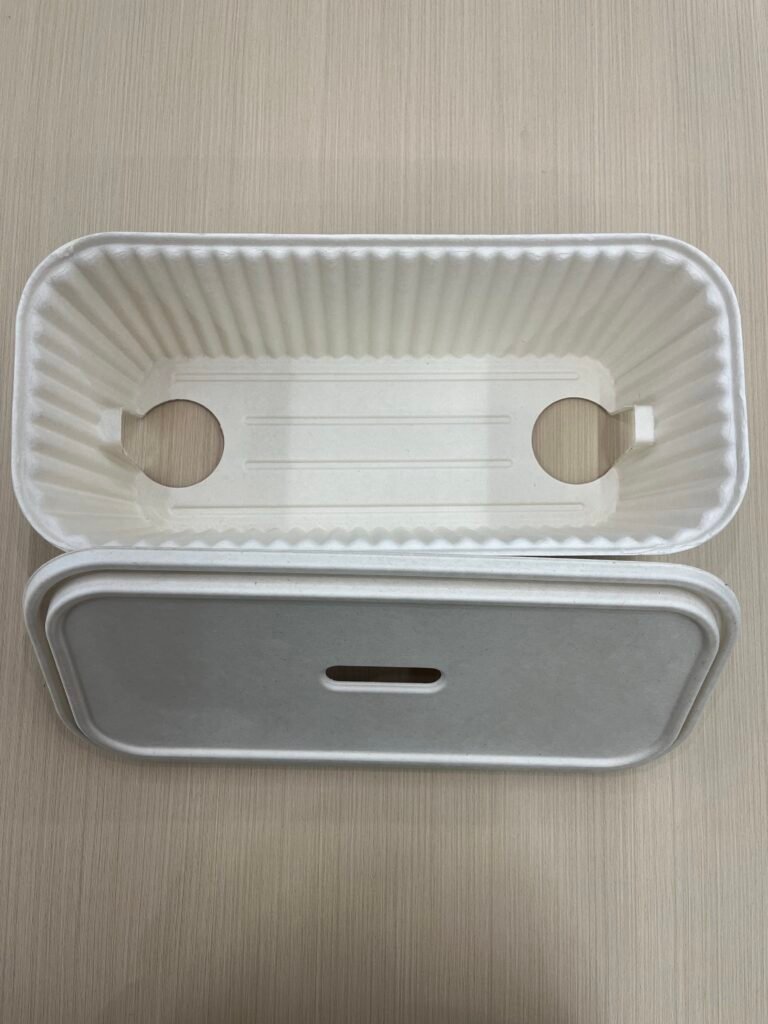
Cosmetic Pulp Inserts Merge Eco Values and Luxury Unboxing Experience
Beauty brands want sustainable packaging without losing premium feel. Cosmetic packaging pulp trays fit neatly inside gift boxes and cartons. Custom cavities lock bottles and jars firmly during transit and display. Anti-scratch fiber surfaces protect polished glass and metal finishes. Embossing and printing add brand marks on the pulp tray surface. Custom color matching aligns inserts with brand visual guidelines. Buyers must test samples with real bottles and final box dimensions. Small gaps or loose fit can cause product damage in transit. Many beauty brands phase out plastic blister trays for this pulp option. This tray style helps brands communicate ESG goals to end consumers.
Medical Pulp Trays for Exported Surgical and Diagnostic Devices
Medical device exporters need ultra-clean, low-shed packaging inserts. Tonghe Paper’s medical pulp trays use pure virgin wood pulp stock. No fluorescent agents enter the production workflow at any stage. Clean workshop controls lower dust risk for sterile medical parts. Custom cavities fit surgical instruments, probes and nursing supplies. The trays support EO sterilization before final device packaging. Material inspection reports go with shipments for overseas audits. Degradable pulp helps brands reduce plastic tax exposure in Europe. Medical pulp trays have tighter tolerance than general-purpose pulp. Buyers must confirm sterilization compatibility before mold release. Even small fiber shedding can create critical compliance failures.
Molded Fiber Trays for 3C, Home Appliance and Hardware Protection
Electronics packaging needs cushioning against drops and vibration. Eco-friendly molded fiber trays replace foam and plastic vacuum inserts. Integrated molding forms shock zones around fragile product corners. Anti-static modified pulp protects sensitive circuit and connector parts. Tonghe Paper engineers cavity shapes to match exact product geometry. The pulp structure holds parts steady on automated packing lines. Buyers map fragile points and drop test standards for mold design. Stacking pressure is another key factor for wall thickness planning. This tray category works for lighting, small appliances and hardware. It delivers comparable protection to traditional foam packaging. Weight savings also help cut ocean and air freight shipping costs.
Multi-Purpose Pulp Trays for Turnover, Display and Branded Packaging
Pulp packaging trays serve repeated turnover and retail display tasks. Selected designs stack compactly to save space in warehouses. Printing and embossing turn inner trays into branded display pieces. Custom molded pulp trays handle irregular or unique component sets. Tonghe Paper’s in-house mold team develops complex integrated shapes. Buyers are not limited to standard rectangular or round cavity forms. Extra functions include moisture-proof coating and anti-static treatment. This flexible tray group works for both industrial and consumer goods. Reusable pulp trays offer a middle ground between plastic and single-use. Repeated handling tests help buyers confirm long-term durability.
Sample Testing Is Mandatory Before Bulk Molded Pulp Orders
Tonghe Paper supports sample requests for buyer evaluation and testing. Buyers need to share product dimensions and logistics conditions. Sample reviews focus on several practical performance points. Engineers check wall thickness, edge coverage and cavity fit tightness. Moisture resistance and stacking stability also get close inspection. Samples reveal design flaws before expensive mold production starts. Many buyers skip sample testing and face costly mass production delays. Free samples reduce risk for cross-border packaging procurement projects. Sample results guide final adjustments to coating and mold geometry. All test data should be recorded for future quality reference.
Common Buyer Questions About Custom Molded Pulp Trays
Can molded pulp trays be fully shaped around unique product forms? Yes. Tonghe Paper builds custom molds for irregular product outlines. Material, color, LOGO and special functions can be adjusted freely. The factory owns internal mold capacity for complex one-piece structures. What is the standard MOQ and lead time for custom pulp trays? Standard MOQ sits at 1,000 pieces for most custom molded pulp trays. Normal production lead time ranges from 15 to 30 calendar days. Monthly factory capacity reaches up to 1,000 tons of pulp output. Mold complexity may change the timeline for special development jobs. Are molded pulp trays acceptable for export to regulated markets? Plant-based molded pulp meets major global recyclability rules. Tonghe Paper complies with SGS RoHS and PFAS-free requirements. Buyers still need to match tray grades to local packaging laws. Food, medical and electronics lines carry separate compliance rules. Different target markets require different supporting documents.
Final Outlook for Molded Pulp Packaging Sourcing
Molded pulp trays will keep replacing plastic inserts across industries. Success depends on matching the tray grade to the project’s real needs. Generic pulp trays create hidden risks for compliance and product safety. Buyers should start sourcing by defining product and logistics limits. Material specs, cavity design and coating all change final performance. Working with an experienced molded pulp manufacturer reduces risk. Tonghe Paper’s application-focused checklist simplifies global buyer work. Sample validation and document review remain the best procurement practices. Brands that choose properly fitted pulp trays gain compliance and protection.