
Growing Regulatory Pressure Shapes Packaging Buyer Decisions
Packaging buyers now face stricter global packaging rules each year. Many buyers search molded pulp trays without clear application standards. A generic pulp tray may fail protection or compliance checks. Tonghe Paper shares a buyer-focused guide to fix this gap. The guide sorts molded pulp trays by real end-use applications. It helps buyers match trays to product risks and export rules. Molded pulp is not a single universal packaging specification. Different projects need unique cavity shapes and surface treatments.
Market Growth Drives Higher Demand for Application-Specific Pulp Trays
The global molded pulp packaging market keeps expanding steadily. Trays remain the largest single segment of molded pulp output. New EU packaging rules push recyclable packaging adoption fast. Packaging must meet recyclability targets by January 1, 2030. Wood, bamboo and sugarcane pulp fit this regulatory direction well. Healthcare molded pulp also sees steady year-on-year growth. Hospital plastic restrictions fuel demand for medical pulp trays. Buyers need verified material data before placing bulk orders.
Cosmetic Packaging Pulp Trays Balance Protection and Brand Look
Beauty brands need inner inserts inside gift boxes and cartons. Cosmetic packaging pulp trays hold glass bottles securely in place. Custom cavities stop bottles from shifting during shipping. The pulp material delivers soft anti-scratch cushioning protection. Tonghe Paper provides custom coating, embossing and printing. Brands can show visual identity while protecting cosmetic goods. Color and thickness settings adjust to match brand requirements. This tray type combines premium presentation and shock resistance. Many beauty brands replace plastic blister inserts with this option. Sample fitting is critical before confirming mass production molds.
Medical Device Pulp Trays Require Strict Cleanliness and Sterilization
Medical pulp trays belong to a separate high-spec product line. Tonghe Paper uses virgin wood pulp for medical molded pulp trays. No fluorescent agents are added in the whole production process. Production takes place inside a controlled clean workshop. The one-piece molded design delivers precise component positioning. This tray family supports EO sterilization for medical hardware. Custom cavities fit probes, handles, catheters and surgical tools. Buyers must collect material inspection reports for audit use. Sterilization compatibility needs full verification before molding. Low dust and non-shedding traits are core requirements here. These trays help exporters manage plastic tax rules in western markets.
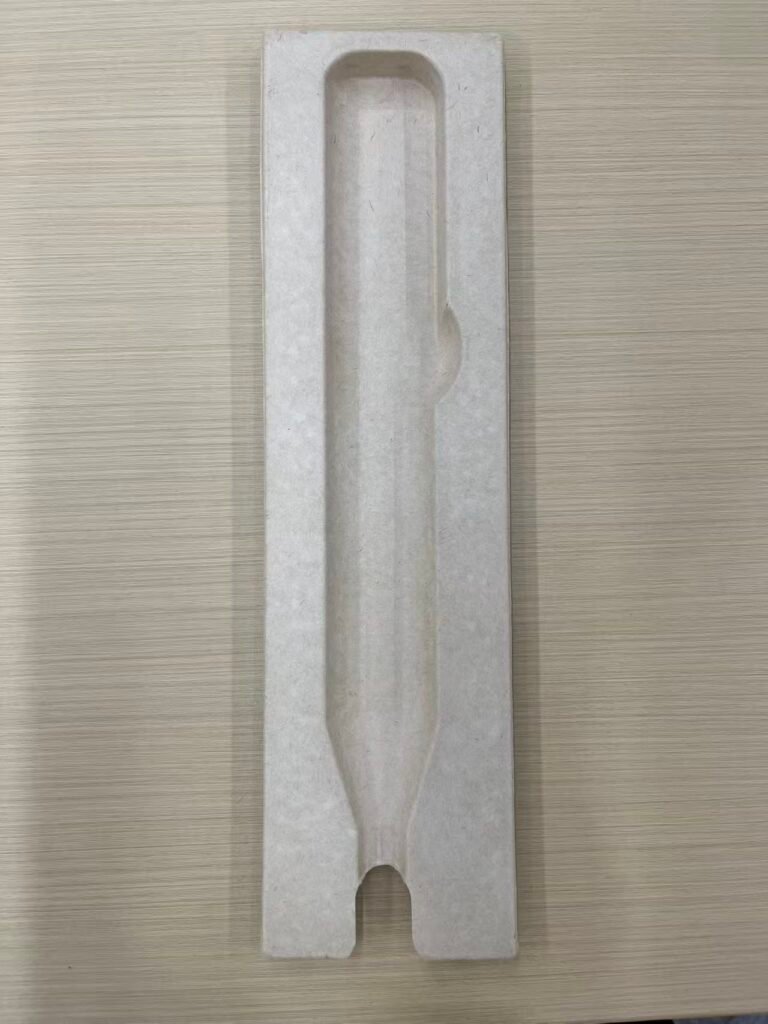
Eco-Friendly Molded Fiber Trays Replace Foam for Electronics Goods
Electronics and hardware products need reliable shock absorption. Eco-friendly molded fiber trays act as integrated inner liners. Custom corners and edges follow product outer contours closely. This design reduces product movement and transport damage risk. Modified pulp formulas support anti-static performance options. Anti-static pulp suits connectors and sensitive electronic parts. The trays can replace EPS foam and vacuum-formed plastic liners. Pressure and impact resistance match many traditional cushioning materials. Buyers should map fragile zones and contact points early in design. Stacking orientation also affects final mold and wall thickness plans.
Custom Molded Pulp Trays and Multi-Purpose Pulp Packaging Trays
Pulp packaging trays work for turnover and repeated handling scenarios. Select styles stack neatly to save warehouse storage space. Custom molded pulp trays form around one exact product or set. Tonghe Paper runs an in-house mold development department. Engineers build complex and irregular one-piece pulp structures. Buyers can review mold samples before full mass production starts. LOGO, moisture-proof and anti-static functions are optional add-ons. This flexible category fits mixed industrial and retail packaging jobs.
Step-by-Step Workflow to Select the Right Molded Pulp Tray
First, document product weight, dimensions and fragile surface zones. Record moisture sensitivity and allowed movement tolerance values. Second, define logistics and storage conditions for the packaging. Note if trays go into mail boxes, pallet displays or auto packing lines. Third, list all compliance rules for the target export destination. Food contact, sterilization and recyclability rules change raw material picks. Fourth, engage mold engineering teams in early project discussions. Check multi-compartment locks, irregular shapes and special edge guards. Fifth, request pre-production samples for physical fit testing. Check wall thickness, edge coverage and moisture resistance performance. Sixth, confirm quality control steps including IQC, IPQC and FQC checks. Seventh, lock supply chain terms such as MOQ and production lead time. Tonghe Paper supports a standard MOQ of 1,000 pieces for custom trays. Normal production lead time falls between 15 and 30 working days. Monthly factory capacity reaches up to 1,000 tons of molded pulp goods.
Key Specification Reference for Tonghe Molded Pulp Trays
Raw material choices include sugarcane, bamboo and wood pulp blends. Thickness can be customized within the 0.8 mm to 5.0 mm range. Finished moisture content is controlled under 8–12 percent. Edge crush strength ranges from 3 kN/m to 8 kN/m. Compressive strength ranges from 2 MPa to 8 MPa. Standard temperature range is -20°C to +80°C. Food grade versions extend upper temperature limit to 120°C. Surface finishes include natural, white, yellow and custom colors. These figures are catalog ranges, not guarantees for every mold shape. Each cavity design needs separate strength validation by the supplier.
Final Tips for Buyers Planning Molded Pulp Tray Projects
The best molded pulp choice follows project needs, not material hype. Food, cosmetic, medical and electronics projects carry different demands. Cavity precision, protection level and compliance documents vary widely. Buyers should start by defining product fragility and logistics routes. Sample testing remains the most reliable final validation method. The application comparison table supports clear discussion with Tonghe Paper. This guide helps international buyers cut costly packaging specification errors.