
Introduction
Cross-border packaging buyers focus more on production consistency now. Stable manufacturing decides whether molded pulp trays pass overseas inspection. Molded pulp trays replace plastic and foam inserts for export shipments. They serve electronics, medical, cosmetic, food and many other industries. Tonghe runs a complete molded pulp production line inside its Dongguan factory. The whole workflow includes pulping, forming, drying, hot pressing and trimming. Each stage controls quality and keeps finished products consistent for export. This article breaks down production steps, product categories and selection tips. It also covers common comparison points for global packaging procurement teams.
Step One: Pulping Process for Clean Fiber Slurry
The production starts with qualified natural plant fiber raw materials. Common materials include sugarcane pulp, bamboo pulp and virgin wood pulp. Fibers break down and mix evenly to form uniform pulp slurry. No harmful chemical additives join the mixture during pulping. Tonghe selects high-quality raw materials for different product grades. Medical and food orders use purer virgin pulp without fluorescent agents. General packaging can adopt recycled paper and bagasse fiber to cut cost. Good pulp quality is the foundation of strength and surface finish. Poor pulp mixing will cause weak spots and uneven tray thickness.
Step Two: Wet-Press Forming to Lock Product Contour
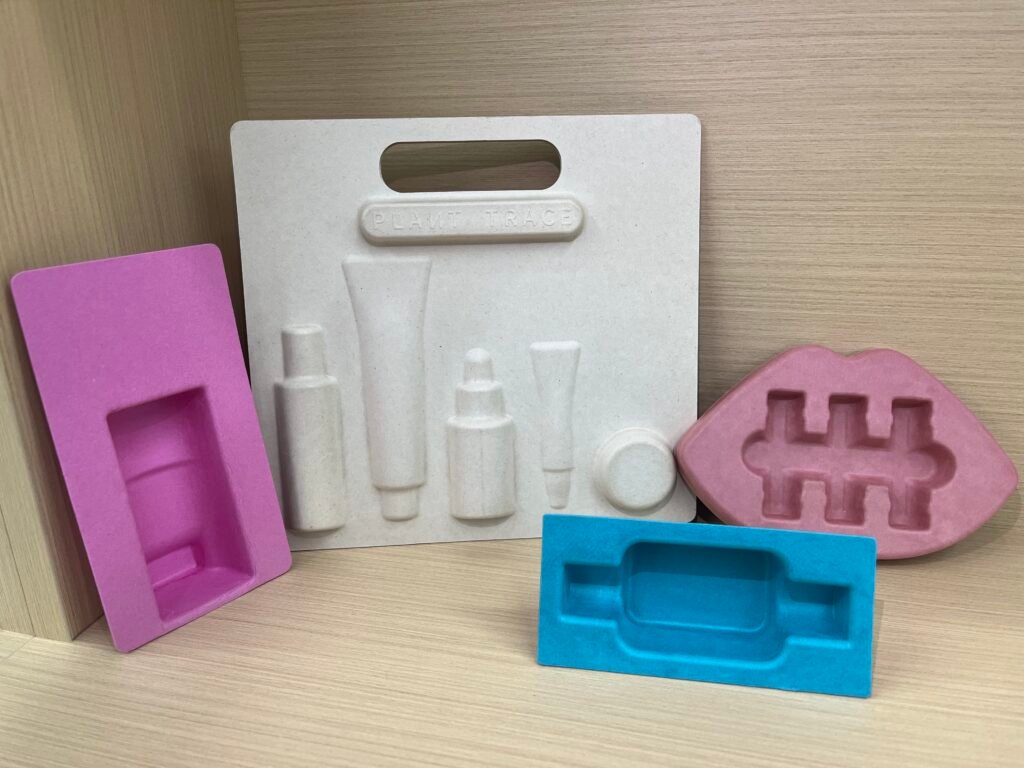
Prepared slurry flows into wet-press molding machines. Molds shape the wet fiber into the designed tray structure in this stage. Ribs, cavities, positioning walls and buffer corners take shape here. This step defines how well the tray fits the target product. Custom mold design directly decides protection performance for irregular goods. Tonghe’s internal mold team develops tooling for unique customer requirements. The team adjusts rib layout to strengthen high-stress areas of the tray. Wet forming density controls the basic bonding status of fiber layers. Standard wet pressure ranges sit between 0.15 and 0.25 g/cm³.
Step Three: Drying Controls Critical Moisture Level
Freshly formed wet pulp parts carry large amounts of water. Workers place wet pieces in hanging baskets and ventilated drying zones. Air drying removes water until moisture hits the target range. Export-grade molded pulp needs moisture content below 8–12 percent. Moisture control is one of the most critical checks for sea freight orders. High humidity on ocean vessels easily damages under-dried pulp trays. Over-dried pulp may turn brittle and crack under stacking pressure. Tonghe monitors moisture data batch by batch before next processing. Stable drying systems avoid batch quality fluctuation for export orders.
Step Four: Hot Pressing Improves Density and Surface Quality
Dried pulp blanks go through hot press machines after drying. Heat and pressure compact the fiber structure tightly together. Hot pressing raises dry density, rigidity and dimensional accuracy. It smooths rough fiber surfaces and reduces loose paper scraps. This process also locks the final thickness of each molded pulp tray. Dry density after hot pressing normally falls between 0.28–0.45 g/cm³. Higher density brings stronger compression and edge crush resistance. Brands that need premium surface look choose enhanced hot pressing. Hot pressing is essential for cosmetic and high-end electronic packaging.
Step Five: Trimming, Inspection and Packing for Shipment
Hot-pressed trays still carry extra flash along the outer edges. Trimming machines cut off excess material for clean finished outlines. Then quality inspectors check dimension, surface and structural defects. Unqualified pieces get sorted out before bulk packing. Qualified trays stack neatly and pack into export cartons. Full inspection helps reduce complaint risks for overseas buyers. Every batch keeps production records for traceability. This strict workflow supports long-term stable export delivery from Tonghe.
Eight Main Categories of Molded Pulp Trays
General molded pulp trays come in natural color or bleached white. Natural pulp offers better cost performance for ordinary protection needs. White bleached pulp looks cleaner for visible retail packaging. Surface treatments include calendaring, water resistance and oil resistance. Custom molded pulp trays replace custom foam and vacuum plastic inserts. They fit one specific product and follow EU environmental rules. Eco-friendly molded fiber liners deliver strong all-around cushioning. Anti-static versions serve electronic components and wire connectors. Biodegradable pulp trays contain zero plastic film and zero microplastics. They decompose naturally in soil or industrial compost environments. Pulp packaging trays support logo printing and embossing for brand display. Medical pulp trays support EO sterilization and low-dust clean production. Cosmetic pulp inserts protect glass containers and support custom colors. Food-grade pulp trays are safe for direct contact with food items.
Core Selection Criteria for International Buyers
Buyers should not judge molded pulp only by appearance and price. Moisture content ranks top for cross-border sea shipment projects. Edge crush strength and compressive strength matter for pallet stacking. Thickness selection depends on product weight and fragility level. Heavy and sharp items need thicker pulp or special barrier coating. Temperature range decides suitability for cold chain or hot food use. Anti-static treatment is mandatory for sensitive electronic parts. Medical projects must confirm virgin pulp, clean workshop and test reports. Food orders need formal food contact safety documentation. Brands focused on presentation can select embossing and printing options.
Market Growth Drivers Beyond Environmental Policies
Consumer preference for sustainable packaging supports market expansion. Many global retailers set internal plastic reduction roadmaps. Lightweight pulp packaging cuts carbon emissions in transport links. Custom molded pulp reduces extra filler materials inside boxes. The medical molded pulp segment grows faster than average market speed. Hospital plastic bans and sterilization requirements lift related demand. Molded pulp can be recycled alongside regular paper waste. It creates simpler waste sorting for end customers and distributors. These advantages make it attractive for long-term brand sustainability plans.
Common Molded Pulp FAQs for Procurement Teams
Buyers often ask about raw materials for molded pulp trays. Tonghe uses sugarcane pulp, bamboo pulp, wood pulp and recycled fiber. All selected materials support full recycling after product use. Many buyers ask whether molded pulp is truly biodegradable. Under suitable compost conditions, it fully breaks down in around 28 days. Qualified pulp trays have no plastic coating or microplastic residues. Food-grade variants safely work across -20°C to 120°C temperature range. Customization is available for shape, color, thickness and surface treatment. Complex irregular cavity structures can be produced with proper mold design. Molded pulp trays serve electronics, medical, food, cosmetic and hardware sectors.
Conclusion
Molded pulp manufacturing relies on controlled multi-stage processing. Each production step shapes the final strength, moisture and surface quality. Buyers must match tray types and technical parameters to product needs. Regulatory compliance, transport safety and logistics savings support adoption. Tonghe maintains integrated mold making and full production capacity. It serves global buyers with export-ready molded pulp packaging solutions. Sample testing helps buyers verify protection and quality before bulk orders. Molded pulp will keep replacing petroleum-based packaging in global supply chains.